Do you picture coffee on a sunny deck over Richardson Bay or a low‑maintenance condo with easy parking and an elevator? If you are torn between a Sausalito condo and a floating home, you are not alone. Each path delivers a distinct lifestyle and a very different set of costs, approvals, and long‑term considerations. In this guide, you will learn how financing, monthly fees, inspections, climate risk, and resale differ so you can choose with clarity. Let’s dive in.
When you buy a condo, you receive deeded ownership of your unit and membership in the HOA. The HOA manages shared spaces, building systems, rules, and reserves. If you plan to use FHA or VA financing, confirm early whether the condo project meets program requirements, since many lenders follow agency rules for project approval. You can review general FHA condo guidance on the HUD site for context on approvals and questionnaires. Learn more about FHA condo eligibility.
With a floating home, you typically own the home itself and lease the berth from a private marina. Lease terms drive value and risk. Look closely at lease length, renewals, rent escalators, pass‑throughs for dock projects, parking, utilities, and whether the lease can transfer on sale. Waldo Point Harbor, one of the principal Sausalito communities, illustrates how established these neighborhoods are and how dock rules shape daily life. See marina context at Waldo Point Harbor.
Tax treatment matters too. In California, a floating home that is permanently moored, lacks self‑propulsion, and has continuous shore hookups may be assessed like real property rather than as a vessel. Always confirm the classification for a specific property with the Marin County Assessor before you release contingencies. Review Marin’s guidance on floating homes.
Conventional loans are standard for condos, and FHA or VA loans may be available if the project meets program rules. Lenders will ask for HOA information, reserve data, and confirmation that the building meets agency criteria such as owner‑occupancy and delinquency thresholds. Verifying project eligibility early helps you avoid last‑minute snags. Explore FHA resources for condos.
Floating‑home financing is a specialty product with fewer participating lenders. Industry reporting notes that lenders often keep these loans in portfolio rather than selling them to the agencies, and they may require larger down payments and shorter terms or higher rates than a comparable land‑based mortgage. Expect requests for specialized appraisals and marine or float inspections as part of underwriting. Prequalify with a lender experienced in floating homes so you understand documentation and timing upfront. See industry context on houseboat financing patterns.
Condo dues vary by building and amenities. Dues commonly fund building insurance for common areas, exterior maintenance, landscaping, elevator upkeep, and reserves. Special assessments can occur and are typically governed by association rules and disclosures. Review the HOA budget, reserve study, and meeting minutes to anticipate upcoming projects.
Floating‑home owners pay monthly berth fees to the marina. These fees often support dock utilities, security, parking rights if included, and dock maintenance. Fees vary by dock, berth size, and lease form. Because the lease underpins the economics, confirm whether rent resets on sale, whether capital dock or piling projects are passed through, and how utilities are billed.
Recent California legislation affects how berth‑rent increases and vacancy rules work in Marin. AB 252 previously set caps in several Bay Area counties, and Marin stakeholders advanced AB 754 to tailor rules for local marinas. Your attorney or title team should confirm which law applies to your berth and how it interacts with the lease. Read Marin’s sponsor summary of AB 754.
Floating homes include two systems to evaluate: the house above water and the flotation and mooring system below. Plan for a marine survey, a certified float or hull inspection, and shore‑power and pump‑out checks. Common maintenance items include floatation repairs, piling replacement, corrosion at shore‑power connectors, GFCI upgrades, and vigilant moisture and mold monitoring. Marinas may also have schedules or requirements for dock work that can lead to costs shared through lease provisions. Get familiar with marina living basics.
Condo maintenance focuses on interior upkeep, while the HOA manages building systems and exterior elements. Your pre‑purchase review should include HOA reserves, planned capital projects, and any history of water intrusion, roof work, elevator upgrades, or facade repairs. Healthy reserves reduce the risk of surprise assessments, but always read the latest minutes and disclosures to gauge timing and scope of work ahead.
Floating‑home buyers typically need tailored coverage, such as marine or houseboat insurance for the structure, personal property, liability, and pollution liability for fuel or oil. If a lender requires flood insurance or if the berth lies in a Special Flood Hazard Area, plan for NFIP coverage or an acceptable alternative. Standard homeowners policies may not fully address liveaboard or floating‑home risk, so work with insurers who understand this niche. See a liveaboard coverage overview and review FEMA flood insurance basics.
Sausalito is advancing a Shoreline Adaptation Plan that studies sea‑level rise, storm surge, and king tide effects on waterfront areas. The plan explores options like protection, elevation, and living‑with‑water strategies. Over time, this planning can shape costs and capital priorities for both marinas and waterfront condos, including access roads and parking. Reviewing the city’s materials will help you understand long‑term exposure in the areas you are considering. Explore Sausalito’s shoreline adaptation work.
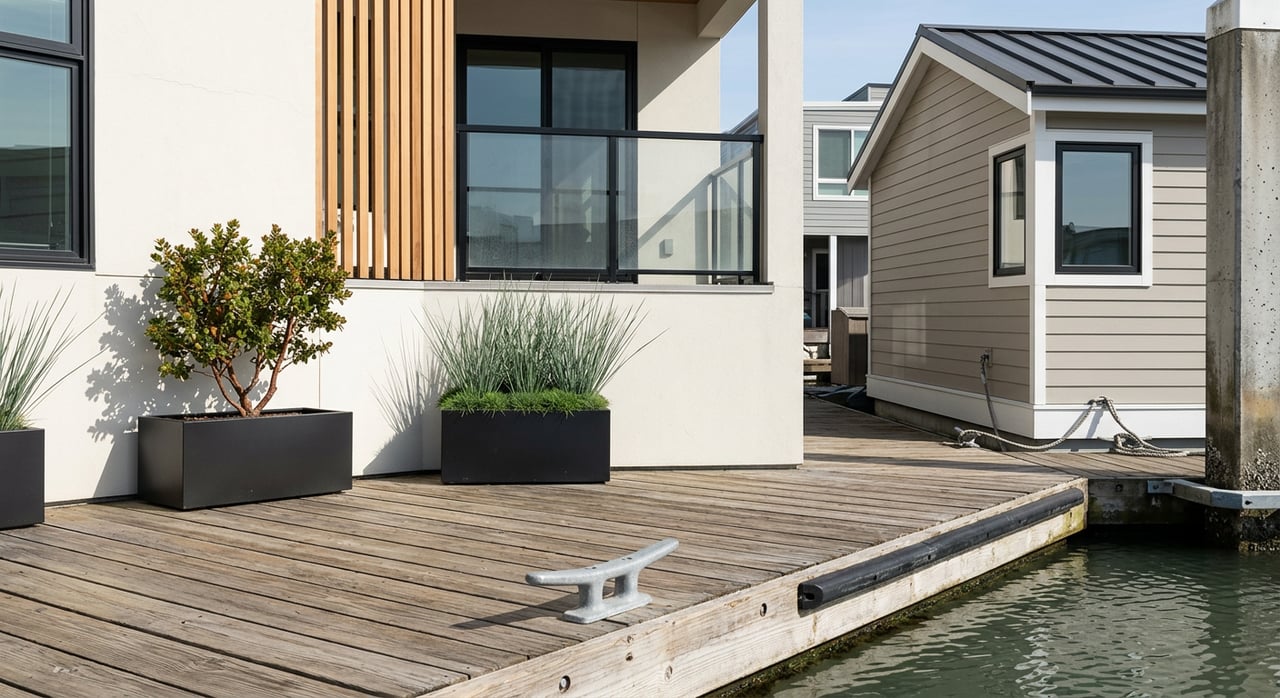
Dock living feels intimate and close to the water. You will use gangways and dock walkways, manage shore‑power, and follow pump‑out routines. Parking can be limited or managed under marina rules, and moving large items requires planning. Emergency access depends on marina layout and local protocols, so review posted procedures and ask about fire and safety plans. See a marina community’s perspective.
It also helps to understand the difference between permitted floating‑home communities and the region’s enforcement work on unpermitted anchor‑outs. These are distinct legal frameworks with different oversight and obligations, and they help explain why permitted docks operate with structured leases and rules. Read a regional enforcement context note.
Condos usually offer straightforward building access, elevators, conventional parking, and established fire and life‑safety systems. Your daily rhythm is similar to urban or suburban living, with easy package delivery and a shorter carry for groceries compared to a long dock walk. Your commute and ferry access will vary by building location.
Condos benefit from a broader buyer pool, including owner‑occupants and some investors where allowed, and agency‑eligible financing can support faster resale. Floating homes are more niche and valuation leans on dock‑specific comparables, lease transfer terms, floatation condition, parking rights, and regulatory context. Expect more specialized appraisals and potentially longer market times for floating homes compared to typical condos.
Gather these items early and share them with your lender and insurer:
Choose a Sausalito condo if you want the broadest financing options, a larger buyer pool for resale, and simpler monthly budgeting through an HOA. Choose a floating home if you want an immersive bayfront lifestyle, can navigate specialty lending and insurance, and are comfortable managing a berth lease and marine inspections. Either path can be a smart move if you match the property to your goals and complete focused due diligence.
If you want help weighing the tradeoffs at a specific address or dock, we are here to guide you through the details. From HOA reserves and project approvals to berth leases and float surveys, we can help you move with confidence in Sausalito.
Ready to explore Sausalito on the water or on land? Connect with the Tam Home Team for tailored advice and next steps.
Contact Tam Home Team today to get started on your real estate journey with the experts for California Luxury Real Estate.
Contact UsCompass
250 E Blithedale Ave,
Mill Valley, CA 94941
Rose De Angelo | CA DRE# 01483899