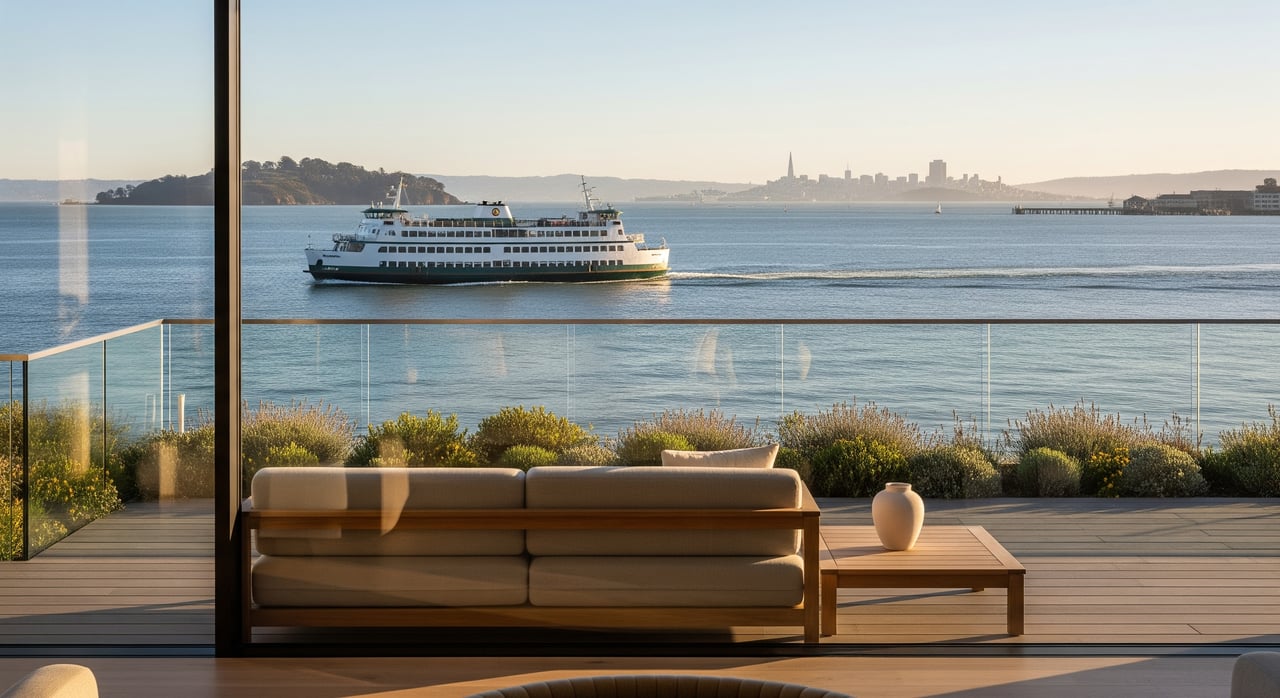
Swapping gridlock for a salt‑air cruise across the Bay can be life changing. If you are eyeing Belvedere or Tiburon for the scenic ferry commute to San Francisco, you likely want beauty without losing predictability. In this guide, you will learn how the Tiburon ferry shapes daily life, what to check before you move, neighborhood access to the dock, and the tradeoffs that matter. Let’s dive in.
Weekday ferry service is designed for commuters. Most runs head toward San Francisco in the morning and return in the late afternoon and early evening. Midday and reverse‑direction trips are less frequent, so you will want to align work hours with the schedule.
Crossing the Bay typically takes tens of minutes, not hours. You will add time for boarding and moving between the terminal and your office. The onboard experience is scenic and calm, with skyline and bridge views that many commuters call the best part of the day.
Expect a handful of departures in each peak window rather than continuous service. Gaps can be 30 to 60 minutes or more depending on time of day. Weekend and holiday service often follows a different timetable, and summer can draw extra recreational riders.
Ferries are generally reliable for daily use. That said, high winds, fog, or mechanical issues can cause delays or cancellations. The operator posts service alerts and real‑time updates, so subscribe and keep a backup plan for important meetings or after‑hours commitments.
A ferry‑based routine works best if your schedule is fairly consistent. If your job often runs late or very early, plan alternatives like driving or using other transit on those days. Many residents mix ferry days with occasional car trips or remote work.
The Tiburon ferry terminal sits on the waterfront near Old Town Tiburon. If you live on Belvedere Island or in Downtown Tiburon, you may be able to walk or bike. From neighborhoods farther out, expect a short drive or e‑bike ride.
Streets around the peninsula are relatively short and direct, though some routes include hills. Many commuters use bikes or e‑bikes for the first and last mile. Ferries often allow bicycles, but space can be limited on peak departures. Verify the operator’s bike policy and arrive early to secure a spot.
Parking is limited compared with peak demand. Options can include on‑street spaces with time limits, small municipal or private lots, and nearby residential permit zones. If driving to the dock is part of your plan, visit during a weekday peak to see real conditions and check local rules before you commit to a routine.
Local fixed‑route transit provides limited connections. Some employers offer private shuttles or transit subsidies that can help. Taxis and ride‑hail are useful for unpredictable return times, but factor in the cost if you expect to rely on them often.
Most public ferry terminals include ADA boarding ramps and accessible ticketing options. Amenities like restrooms and covered waiting areas vary by terminal. If accessibility features are important to you, confirm details directly with the operator.
Belvedere is a small, residential community with direct water access. Depending on your location on the island, you may be within a comfortable walk or bike ride to the Tiburon terminal. Proximity can simplify your routine and make your commute more predictable.
Old Town and the downtown waterfront place you steps from cafés, restaurants, and the dock. If you want to grab a coffee before boarding or run quick errands after you return, this area is convenient. It delivers a classic small‑town waterfront feel that many commuters value.
These residential areas are a short drive or bike ride from the terminal. You get a quieter setting with access to marinas and trails. If you work hybrid or do not mind a quick drive for peak trips, these neighborhoods can offer balance.
Streets on the hills or closer to the Strawberry border often require a short drive to the dock. They tend to be quieter. If you plan to park near the terminal, verify your options first so your door‑to‑dock time stays consistent.
Homes near the waterfront or within an easy walk to the ferry often carry a premium. You pay for the views and for commute convenience. If you are willing to add a short drive or bike ride, you can often find more value while keeping the ferry in your routine.
If you plan to drive to the dock, prioritize properties with reliable parking or a garage. This reduces stress on busy days. It also gives you flexibility for off‑hour trips when the ferry schedule does not match your needs.
Waterfront areas and streets near the terminal can see concentrated traffic during peak commute times. Summer weekends bring more visitors. If you prefer a quieter setting, consider homes slightly removed from the most active blocks.
For late nights or very early mornings, consider alternatives like driving over the Golden Gate, using another ferry route, or shifting a day to remote work. Many commuters blend modes to match their schedules.
Many Bay Area employers offer commuter benefits that can offset ferry fares. Check with your HR team about pre‑tax options or subsidies and whether the ferry operator’s passes qualify.
Fares are typically charged one way per passenger. Monthly or multi‑ride passes are often available and can lower the cost for regular riders. Discounts for seniors or youth may apply based on the operator’s policy.
Most systems support mobile ticketing and contactless payment to speed boarding. Paper tickets or onboard purchases can be limited or more expensive. Peak departures can fill, especially if you plan to bring a bike, so arriving early helps you secure a seat and rack space.
The first and last mile shape your door‑to‑door time. Walking is the most predictable if you live close to the dock. E‑bikes allow you to bypass parking stress and hills and are a popular choice in the area. If you rely on ride‑hail, build in a buffer for wait times during the evening return.
Here is a simple way to gauge the real commute before you buy or sign a lease:
Repeat this estimate for both morning and evening. If you plan to bring a bike, add time for boarding and disembarking at each end.
Use this checklist to validate your plan before you commit to a move:
If you value a calm, scenic start and end to your day and your work hours match the schedule, the Tiburon ferry can be a standout choice. It rewards proximity and planning. The closer you live to the dock, the simpler your routine and the more predictable your commute.
If your schedule is often unpredictable, make sure your home choice supports a backup plan, whether that is a garage space for early drives or easy access to alternative routes. Either way, a quick test week will tell you a lot about how the commute fits your lifestyle.
Thinking about a commute‑first move to Belvedere or Tiburon? With deep neighborhood expertise across Marin, we help you weigh proximity, parking, and property features so your daily routine works as beautifully as your views. Reach out to the Tam Home Team to explore neighborhoods, compare options, and create a plan that fits your life.
Contact Tam Home Team today to get started on your real estate journey with the experts for California Luxury Real Estate.
Contact UsCompass
250 E Blithedale Ave,
Mill Valley, CA 94941
Rose De Angelo | CA DRE# 01483899