Thinking about trading city blocks for redwoods and trailheads without losing your San Francisco connection? If you want more space, strong public school options, and a manageable commute, Mill Valley is often at the top of the list. You may be weighing walkability, ferry access, school boundaries, and the feel of flats versus canyons and hillsides. In this guide, you’ll learn how Mill Valley’s neighborhoods compare for SF families, how commuting works, and what to check before you buy. Let’s dive in.
Mill Valley sits just north of the Golden Gate Bridge with a compact downtown at the base of Mount Tamalpais. It blends small-town amenities with fast access to open space and beaches. According to the U.S. Census QuickFacts, the city has a population of roughly 14,000, which supports an intimate, community-oriented feel.
Home prices have trended high relative to county and state medians, and inventory often reflects Bay Area shifts in commute and remote work patterns. For the freshest data, check Marin County Association of Realtors market reports and cross-reference with current Mill Valley housing data before you tour.
Mill Valley is a city of micro-neighborhoods. A few blocks can change the slope, sun, and parking. Start with these practical groupings, then refine on the street level.
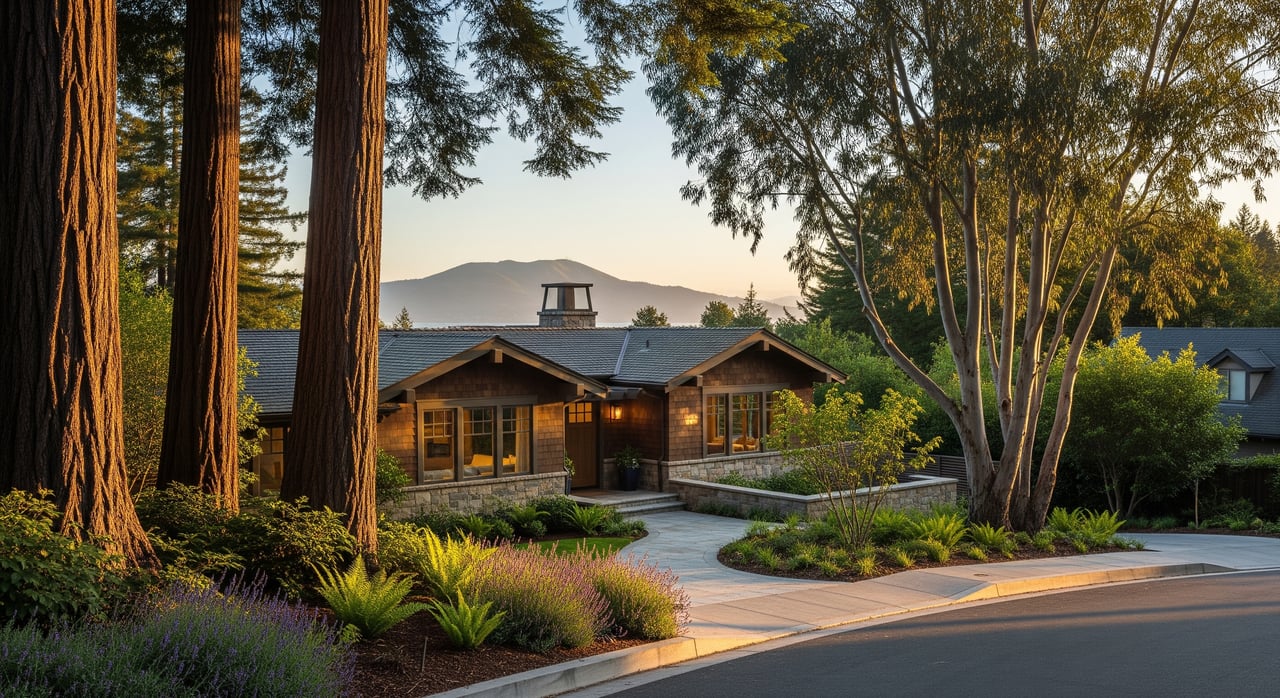
If you picture morning walks to coffee and after-school stops at the park, this is your zone. The Flats around Throckmorton Avenue and adjacent streets are the most walkable, with quick access to shops, the farmer’s market, theaters, and municipal parks. Homes include Craftsman bungalows, cottages, and smaller-lot single-family properties.
Commute access to 101 and bus stops is straightforward. School assignments vary by street, so always verify boundaries with the Mill Valley School District. The Flats often trade yard size for convenience, which many families find worth it.
Running east-west toward Highway 101, the Blithedale corridor offers a balance between downtown access and faster routes to the bridge. You will find a mix of single-family homes and multi-family buildings, with pockets that are walkable to schools and services. If you plan to drive or take bus lines, living near Blithedale can simplify your mornings.
Areas like Cascade Canyon, Homestead Valley, and parts of Tamalpais Valley hug creeks and greenways. You get immediate trail access, wooded privacy, and a quieter residential vibe. Lots can be irregular and older homes are common, alongside remodels.
Driving distance to 101 can be similar to downtown, but local roads are narrower and slower. Transit is less convenient. Many families choose canyons for the play space and nature, accepting a slightly longer or less predictable local drive.
Higher elevations on Mount Tam’s slopes deliver views and privacy. Expect steeper streets, more stairs, and properties that may require additional maintenance for driveways, retaining walls, and tree care. Houses are often larger, with custom builds and remodels.
Commute access usually takes longer due to winding roads and distance from transit stops, though the payoff can be spectacular views and quick access to trailheads.
Strawberry and the southeast edge toward the Larkspur border feel more suburban, with shopping centers and a range of townhomes, condos, and single-family homes. If you plan to ride the ferry, this area puts you closer to the Larkspur terminal. Layouts can feel newer, and certain pockets may offer relatively more budget flexibility compared with core downtown blocks.
Southwest of downtown near Old Mill Park, this neighborhood appeals to families seeking proximity to schools and parks with good walkability to nearby amenities. Housing includes older and mid-century homes, often with usable yards.
Mill Valley supports several commute styles. The best choice depends on your schedule and tolerance for variability.
Many families mix methods. You might drive on early drop-off days, take the ferry on later starts, or design a hybrid schedule to avoid peak congestion. When touring homes, evaluate driveway space, garage storage, and local street parking if you plan to keep multiple cars.
Mill Valley’s public schools are generally well regarded. Elementary and middle schools fall under the Mill Valley School District and high schools are served by the Tamalpais Union High School District. Always verify the exact school assignment for a specific address, since boundaries and enrollment rules can change.
Families also use a wide network of private schools and preschools across Marin, with availability and waitlists varying by year. Parks like Old Mill Park and Boyle Park, plus city community programs and seasonal events, support an active family calendar. For local services and amenities, start with the City of Mill Valley.
Pricing varies by block, lot, and access. As a general pattern, homes near downtown often command higher prices per square foot due to walkability and proximity to schools. Hillside homes can reach higher total prices for size and views, while some edge areas like Strawberry may offer more townhomes or condos.
For a current snapshot, pair Marin County Association of Realtors market reports with current Mill Valley housing data. Inventory moves with Bay Area trends, so it pays to review fresh data before you write an offer.
Mill Valley’s beauty comes with natural considerations. Wildfire risk on slopes and in wooded canyons is part of life here. Review defensible space requirements and insurance options, and learn more through the Marin Wildfire Prevention Authority.
In hillside and creek-adjacent areas, plan for drainage, erosion, or landslide evaluations. Geotechnical input can be a smart investment before you commit to major remodels. If you plan to add an ADU or expand, consult the City of Mill Valley Planning and Building Department for current rules and permits.
Moving from San Francisco is a big step, and the right Mill Valley block can make everyday life feel simpler and more connected to nature. If you want a neighborhood-level plan tailored to your commute, school preferences, and budget, connect with the Tam Home Team. We will help you compare streets, understand tradeoffs, and find a home that fits how you live.
Contact Tam Home Team today to get started on your real estate journey with the experts for California Luxury Real Estate.
Contact UsCompass
250 E Blithedale Ave,
Mill Valley, CA 94941
Rose De Angelo | CA DRE# 01483899